What happens when an MLS stops treating AI as just another subject to teach and starts using it to improve the way it teaches everything else? At Hive MLS, that shift is helping its education team rethink how it creates training materials, supports its subscribers and gets more value from the technology it provides.
The approach is paying off. Hive MLS has reported remarkable improvements in technology adoption and customer satisfaction, with positive results reflected in WAV Group’s Customer Experience Index (CXI) peer group benchmarking.
Hive’s experience offers an important lesson for MLS leaders: AI can improve more than productivity. It can help improve the subscriber experience.
Same Trainers. More Training Power.
Nearly every MLS faces a familiar challenge. New products arrive, existing tech tools add features and subscribers need training that fits their schedules and skill levels. Meanwhile, technology training teams are juggling live classes, webinars, videos, class training material, registration management and a seemingly endless stream of questions.
Hive MLS is demonstrating how AI can help close that gap without replacing the people who know the technology best. Its education team has developed practical workflows that use ChatGPT and Claude to accelerate the creation, organization and evaluation of training content.
The result is an approach that other MLS organizations can learn from, especially those trying to stretch limited education resources while supporting a growing technology portfolio.
Every Class Needs a Handout
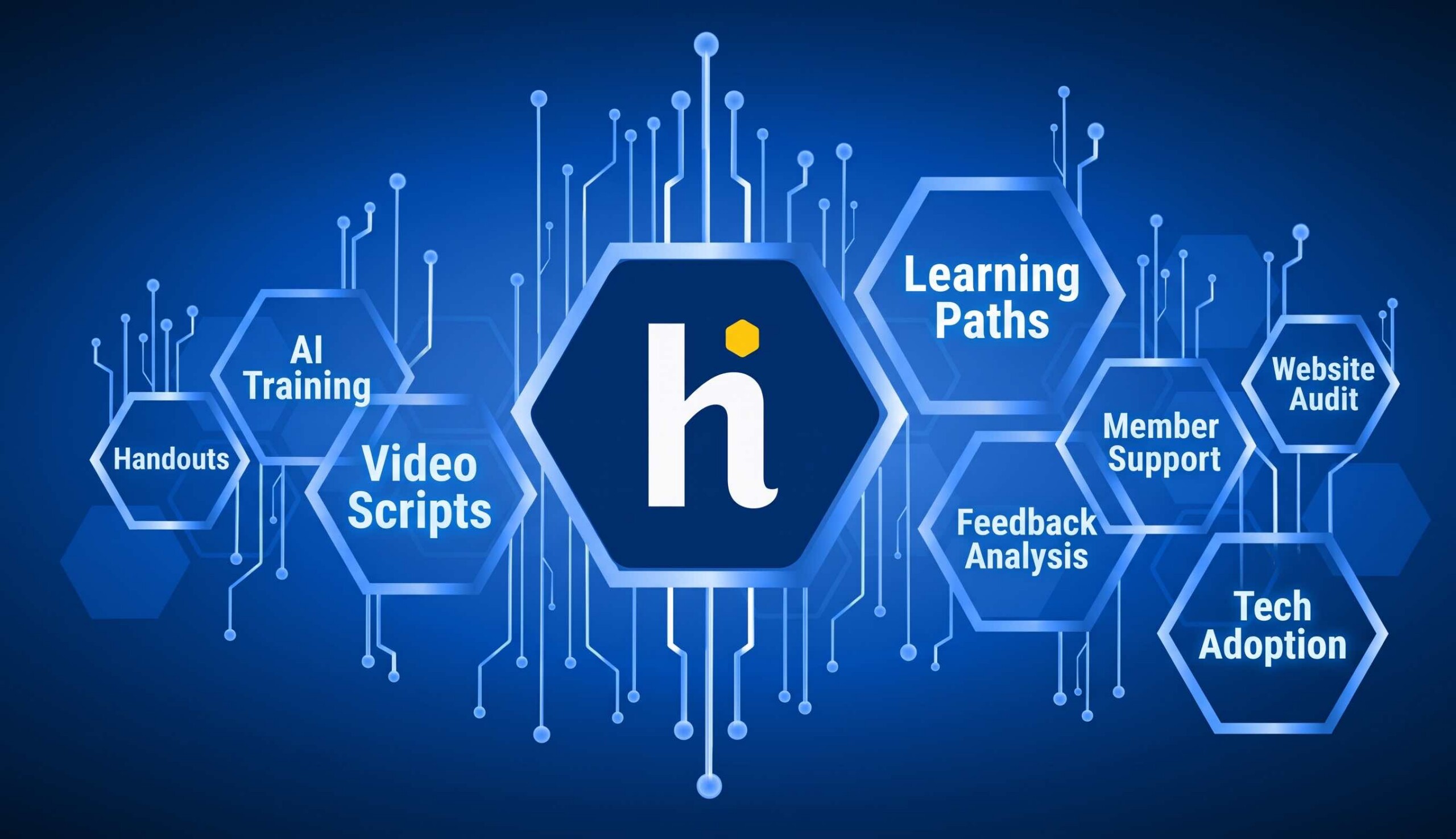
How many excellent MLS classes end without a useful takeaway participants can reference later? Hive’s first example shows how AI can transform a recorded class transcript into a polished handout, complete with step-by-step instructions and consistent formatting.
Instead of starting from scratch, a trainer uploads the transcript and asks AI to generate three design options. Once a preferred design is selected, the trainer creates a reusable project containing the style guide, formatting instructions and MLS branding. Future class transcripts can then follow the same process, creating a consistent library of educational materials.
It’s a practical example of using AI to extend the value of training that has already been delivered. The instructor still provides the expertise, but AI helps turn that expertise into something subscribers can use long after the class ends.
One Voice. Hundreds of Possibilities.
Another example explores AI voice cloning with ElevenLabs. Trainers can create a professional digital version of their own voice, allowing them to produce short instructional videos and make narration changes without repeatedly recording the same material. That’s a potential huge time saver.
Hive’s training guide also demonstrates how AI can help write a detailed recording script designed to capture the sounds, vocabulary and terminology that real estate trainers use every day. It’s a clever way to combine two AI capabilities: using a large language model to prepare the training material and a voice-generation platform to deliver it.
For MLS education teams, the opportunity isn’t to eliminate live instruction. It’s to make short, repeatable educational content easier to produce while allowing trainers to spend more time helping subscribers who need personal help.
Your Training Website Needs Training
Here’s a problem most MLS organizations know well: the training section of their website has become a digital storage closet. Old webinars, outdated PDFs, duplicate resources and broken links make it harder for subscribers to find the answers they need.
Hive’s approach uses AI to audit existing educational resources and recommend better ways to organize them. Its example asks AI to evaluate a training website, identify problems and create three possible layouts, including a task-based resource hub and learning paths for different types of agents.
The important distinction is that AI is instructed to reorganize existing resources rather than invent new ones. The education team reviews the recommendations and decides what to implement, keeping humans responsible for the final decisions.
Fifty-Two Weeks. One Smart Prompt.
What if an MLS could plan an entire year’s worth of short training videos without spending weeks building an editorial calendar? Hive demonstrates how a carefully constructed AI prompt can help generate 52 weekly video topics, organize them around an agent’s workflow and draft scripts designed to run in less than 90 seconds.
The example goes beyond asking AI for dozens of ideas. It specifies which software products need the most attention, how frequently other products should appear, the sequence of lessons and the information needed for each video.
Most importantly, trainers are instructed to remain the HIM and the HER: verify everything as the human in the middle by comparing it to the live software and be the human that evaluates and reviews before recording. AI can draft a script in seconds, but that doesn’t mean it knows whether a button has moved or a feature has changed. Those final two steps are essential: every, single, time!
Even Complaints Can Teach Us Something
Leveraging AI to analyze input may be one of the most valuable because it closes the technology training feedback loop. Hive demonstrates how AI can review class survey responses, identify recurring themes and distinguish between instructor issues, software problems and even gaps in documentation.
Hive MLS prompts AI to recommend the smallest, useful improvement supported by the feedback. It also requires counts, percentages and an acknowledgment when there isn’t enough evidence to reach a reliable conclusion.
This is where AI can become particularly useful for MLS leadership. Training teams can move beyond simply collecting feedback and begin using it to identify where training needs attention, which resources need updating and where subscribers are struggling.
Better Training with Better Technology Adoption
Perhaps the biggest lesson from Hive MLS isn’t that AI can write handouts, generate video scripts or analyze spreadsheets. Most MLS organizations already have access to tools capable of doing those things. What’s different is using them as part of a repeatable education strategy.
Hive’s experience provides a compelling example of what can happen when an MLS applies AI to its own operations rather than limiting AI to classes about the technology. With improvements in adoption and customer satisfaction reflected in WAV Group’s benchmarking, it’s an approach worth examining.
A final thought. MLSs should be asking this question: Are we only teaching our subscribers how to use AI, or are we also using AI to become better at teaching them?
# # #